A new study led by scientists at Northwell Health’s Feinstein Institutes for Medical Research has revealed that defects in different ribosomal proteins lead to a rare blood disorder called Diamond-Blackfan Anemia Syndrome (DBAS) through surprisingly different pathways. This discovery helps explain why patients with DBAS can experience varied symptoms and could lead to more personalized treatments.
This press release features multimedia. View the full release here: https://www.businesswire.com/news/home/20260504292042/en/
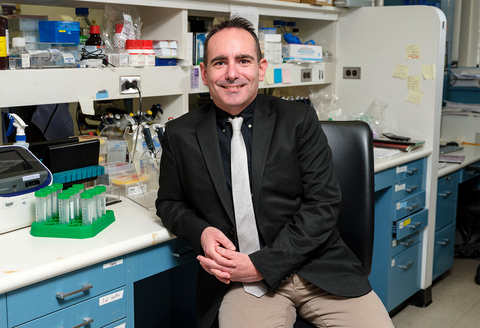
Dr. Lionel Blanc led the study. (Credit: Feinstein Institutes)
DBAS is a serious congenital disorder where the body struggles to produce enough red blood cells, causing severe anemia. It’s often linked to problems with ribosomal proteins (RPs), which are essential for making new proteins in every cell. However, issues with specific RPs may lead to such severe blood cell problems and why the disorder varies among patients has been a long-standing puzzle for doctors and scientists.
Published in Nature Communications and led by Lionel Blanc, PhD, professor in the Institute of Molecular Medicine at the Feinstein Institutes and Les Nelkin Professor of Pediatric Oncology, the research team used advanced mouse models to study two different ribosomal proteins often implicated in DBAS: RPS19 and RPL5. While both problems resulted in severe anemia in the animal models, they affected developing blood cells in very different ways:
- RPS19 problems: Caused a drastic reduction in early blood-forming stem and progenitor cells (HSPCs). These vital starter cells for all blood production died off through a process called apoptosis, which is like a cell’s programmed self-destruct sequence. This was also linked to an increase in a gene called RUNX1.
- RPL5 problems: Did not harm the early blood-forming cells as much. Instead, the issues arose later in the development of red blood cells. These more mature red blood cell precursors died off through a different, more chaotic process called ferroptosis, which involves excessive iron and oxidative stress.
Both types of RP problems activated p53, a critical guardian gene in cells that can stop growth or trigger cell death if something is wrong. Interestingly, the researchers found that simply removing p53 could rescue the blood production in both mouse models, but through different mechanisms. This suggests that p53 acts as a key player, but the specific RP defect steers the p53 response towards either apoptosis or ferroptosis, depending on the cell type and stage of development.
“This study provides crucial insights into the complex biology of DBAS,” said Dr. Blanc. “By understanding these distinct pathways of cell death and the roles of genes like RUNX1, we can begin to think about developing more precise and effective treatments tailored to the specific genetic defect in each patient.”
The findings, which also confirmed similar elevated RUNX1 levels in human DBAS patients with RPS gene mutations, mark a significant step forward in understanding how ribosomal proteins regulate blood cell development and contribute to disease pathogenesis. This detailed mechanistic understanding could pave the way for future therapies that target these specific pathways.
“Dr. Blanc and his colleague’s research is an example of how understanding fundamental biology can unlock mysteries in complex diseases,” said Kevin J. Tracey, MD, president and CEO of the Feinstein Institutes, Karches Family Distinguished Chair in Medical Research. “By showing that different ribosomal protein defects lead to distinct cellular death pathways in Diamond-Blackfan Anemia, they are building a roadmap to develop precise, personalized treatments for patients suffering from this rare blood disorder.”
About the Feinstein Institutes
The Feinstein Institutes for Medical Research is the home of the research institutes of Northwell Health, the largest health care provider and private employer in New York State. Encompassing 50+ research labs, 3,000 clinical research studies and 5,000 researchers and staff, the Feinstein Institutes raises the standard of medical innovation through its six institutes of behavioral science, bioelectronic medicine, cancer, health system science, molecular medicine, and translational research. We are the global scientific leader in bioelectronic medicine – an innovative field of science that has the potential to revolutionize medicine. The Feinstein Institutes publishes two open-access, international peer-reviewed journals Molecular Medicine and Bioelectronic Medicine. Through the Elmezzi Graduate School of Molecular Medicine, we offer an accelerated PhD program. For more information about how we produce knowledge to cure disease, visit http://feinstein.northwell.edu and follow us on LinkedIn.
View source version on businesswire.com: https://www.businesswire.com/news/home/20260504292042/en/
Media gallery