Key Takeaways
- Waterfront properties in Tampa Bay face significantly higher mold risks due to constant exposure to moisture, salt air, and Florida’s average humidity levels of 74-75%.
- Hidden mold can begin growing within 24-48 hours in conditions exceeding 60% humidity, often remaining undetected behind walls, under flooring, or within HVAC systems.
- Professional inspections can detect musty odors, unexplained allergy symptoms, and discolored walls that signal hidden mold growth before it spreads throughout the home.
- Early detection through professional inspection typically costs $300-$600 but prevents remediation costs that can reach $10,000-$30,000 for whole-house contamination.
Living on Tampa Bay’s beautiful waterfront comes with unique environmental challenges that most inland homeowners never face. The constant interplay between humid subtropical air, salt spray, and seasonal storms creates the perfect breeding ground for one of Florida’s most persistent problems: hidden mold growth.
Florida’s High Humidity Creates Perfect Conditions for Hidden Mold
Florida’s subtropical climate maintains year-round humidity levels averaging 74-75%, well above the 60% threshold where mold spores begin active colonization. This constant moisture saturation allows mold to establish colonies on surfaces within just 24 to 48 hours of exposure to adequate moisture levels. Unlike other regions where humidity fluctuates seasonally, Florida’s consistently high moisture content creates a perpetual environment where mold spores—always present in the air—find ideal conditions for growth.
The challenge becomes even more complex in waterfront areas where additional moisture sources compound the problem. Salt air carries microscopic water droplets that penetrate building materials, while proximity to large water bodies maintains elevated ambient humidity even during supposedly “dry” periods. Professional mold inspection services specialize in detecting these hidden moisture intrusion patterns that typical home inspections often miss.
Indoor environments should ideally maintain humidity levels between 30-50% to prevent mold growth, but waterfront homes frequently struggle to achieve these targets without proper moisture management systems. When humidity consistently exceeds 60%, mold spores don’t just survive—they thrive, spreading rapidly through porous materials like drywall, insulation, and wooden framing.
Why Waterfront Properties Face Higher Mold Risks
Constant Exposure to Moisture and Salt Air
Waterfront properties endure relentless exposure to moisture-laden salt air that penetrates even the most well-sealed homes. This salt-infused humidity doesn’t just increase overall moisture levels—it actively corrodes protective barriers and creates microscopic entry points for water intrusion. Window seals, door frames, and exterior wall penetrations deteriorate faster in salt air environments, allowing moisture to seep into wall cavities where hidden mold growth can flourish undetected for months.
The salt content in coastal air also creates hygroscopic conditions, meaning building materials actually absorb moisture directly from the air. Wood framing, insulation, and drywall act like sponges, maintaining elevated moisture content even when surface areas appear completely dry. This hidden moisture provides the perfect environment for mold spores to establish colonies in areas homeowners rarely inspect.
Storm Season Creates Additional Vulnerabilities
Tampa Bay’s hurricane season, running from June through November, presents unique mold risks that inland properties rarely face. Storm systems don’t need to make direct landfall to create problems—even distant hurricanes generate storm surge, wind-driven rain, and dramatic barometric pressure changes that can force water through building envelope weaknesses.
After major storms, indoor humidity levels can spike dramatically as moisture infiltrates through compromised seals, overwhelmed drainage systems, and temporary roof damage. This post-storm environment creates ideal conditions for rapid mold growth, with colonies potentially establishing within 24-48 hours of water exposure. Many waterfront homeowners find extensive hidden mold growth weeks or months after seemingly minor storm damage.
Warning Signs Your Waterfront Home Has Hidden Mold
1. Persistent Musty Odors Without Visible Growth
The most reliable early warning sign of hidden mold growth is persistent musty, earthy odors that seem to have no visible source. These odors typically indicate active mold colonies growing behind walls, under flooring, or within HVAC systems, where air circulation spreads the distinctive smell throughout living spaces. In waterfront homes, these odors often intensify during high-humidity periods or after rain events when existing mold colonies experience accelerated growth.
Many homeowners mistake these odors for “normal” coastal smells or attribute them to nearby water bodies, allowing hidden mold problems to expand significantly before professional detection. Professional mold inspectors use specialized equipment to trace odor sources to their exact locations, often revealing extensive hidden contamination.
2. Unexplained Allergy Symptoms That Worsen at Home
Hidden mold exposure frequently manifests as respiratory symptoms that worsen when spending time indoors but improve when away from the property. These symptoms include persistent coughing, wheezing, sneezing, itchy or watery eyes, skin rashes, and nasal congestion that doesn’t respond to typical allergy medications.
Research indicates that 21% of U.S. asthma cases link directly to dampness and mold exposure, with mold-related respiratory problems generating over $5.6 billion annually in healthcare costs. Waterfront residents often experience more severe symptoms due to the combination of mold exposure and salt air irritation, creating compounded respiratory stress.
3. Discolored Walls or Bubbling Paint
Water intrusion behind walls creates visible surface changes that often signal extensive hidden mold growth. Discolored patches, bubbling or peeling paint, wallpaper separation, and warped or buckling materials indicate moisture problems that likely support active mold colonies. In waterfront homes, these signs frequently appear around windows, doors, and exterior walls most exposed to salt air and storm-driven moisture.
Paint applied over moldy surfaces typically fails quickly, creating a cycle of surface problems that mask deeper contamination issues. Professional inspection can determine whether surface damage indicates localized moisture problems or extensive hidden mold contamination requiring remediation.
4. HVAC System Issues and Poor Air Quality
HVAC systems in waterfront homes face unique challenges from salt air corrosion and elevated humidity levels that create ideal mold growth conditions. Improperly maintained systems become significant breeding grounds for mold due to condensation buildup and inadequate humidity management, then distribute contaminated air throughout the entire home.
Signs of HVAC-related mold problems include unusual odors when the system operates, visible mold growth around vents or ductwork, frequent system cycling, poor humidity control, and increased allergy symptoms when air conditioning or heating runs. Professional inspection can identify whether HVAC systems harbor hidden mold colonies that require specialized remediation approaches.
Health Risks of Undetected Mold in Humid Climates
Respiratory Problems and Asthma Triggers
Hidden mold exposure creates serious respiratory health risks that compound in humid climates where mold growth accelerates rapidly. Mold spores trigger allergic reactions, asthma attacks, and respiratory irritation in both sensitive and previously unaffected individuals. Studies show that dampness and mold exposure increase respiratory illness rates by 30-50%, with approximately 4.6 million asthma cases annually attributed to mold exposure.
In Tampa Bay’s humid environment, mold colonies produce higher spore concentrations that create more severe exposure risks. Waterfront residents face additional challenges as salt air can exacerbate respiratory symptoms, creating compound health effects that make mold-related problems more severe and longer-lasting.
Long-term Exposure Consequences
Prolonged exposure to hidden mold creates cumulative health effects that can develop into serious long-term problems. Beyond immediate respiratory symptoms, extended mold exposure can trigger cognitive issues, chronic fatigue, and immune system suppression that affects overall health and quality of life.
Studies indicate that fungal infections tied to mold exposure result in significant healthcare costs and medical visits annually. Early detection and remediation prevent these serious health consequences while protecting property values and avoiding extensive remediation costs.
Professional Mold Inspection Process for Waterfront Homes
Behind-the-Walls Detection Methods
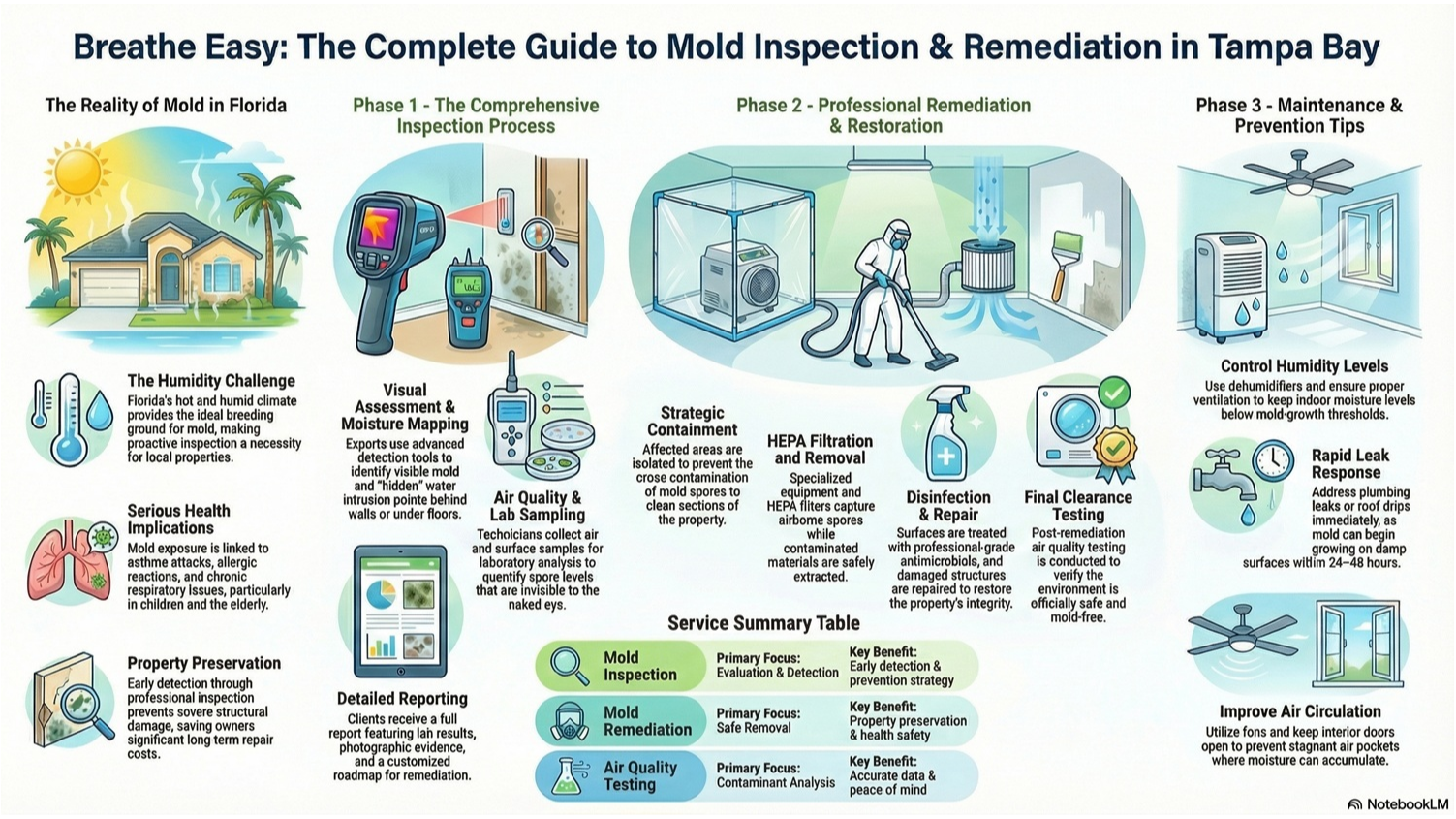
Professional mold inspection uses specialized equipment and techniques designed specifically for detecting hidden contamination in areas invisible to standard home inspections. Thermal imaging cameras identify temperature variations that indicate moisture accumulation behind walls, while moisture meters measure water content in building materials without requiring destructive testing.
Advanced inspection protocols include borescope cameras that allow visual inspection inside wall cavities, specialized air sampling that detects elevated spore concentrations, and surface sampling to identify specific mold species present. These detection methods reveal the full extent of hidden mold problems, enabling targeted remediation strategies that address root causes rather than just surface symptoms.
Air Quality Testing in High-Humidity Environments
Air quality testing in waterfront environments requires specialized sampling protocols that account for naturally elevated outdoor mold spore levels and constant humidity fluctuations. Professional inspectors collect indoor air samples and compare them to outdoor baseline measurements, identifying problematic spore concentrations that indicate active indoor mold growth.
Air testing analyzes both spore types and concentrations, providing detailed information about specific mold species present and their potential health risks. This data guides remediation strategies and helps establish clear success metrics for cleanup efforts, ensuring that remediation achieves safe indoor air quality levels.
What Tampa Bay Waterfront Homeowners Can Expect
Investment Value vs. Future Remediation Costs
Professional mold inspection represents a relatively small investment compared to the potentially devastating costs of extensive mold remediation. Typical inspection costs in Tampa Bay range from $300-$600, while remediation can cost $10,000-$30,000 for whole-house contamination situations.
Properties with documented mold problems can lose 20-37% of their resale value, and up to 50% of potential buyers walk away from purchases once they learn about mold history, even after successful remediation. Early detection through professional inspection protects both current health and long-term property investment by identifying problems when they’re still manageable and cost-effective to address.
Florida Regulations for Mold Assessment
Florida state regulations require separate licenses for mold assessors and remediators to prevent conflicts of interest that could influence remediation recommendations. This regulatory framework protects property owners by ensuring independent assessment of mold problems without bias toward specific remediation approaches.
Licensed mold assessors must follow specific protocols for inspection, testing, and reporting that provide property owners with objective, scientifically-based information about mold problems. Understanding these regulations helps homeowners select qualified professionals and ensure they receive unbiased assessment services.
Choosing the Right Waterfront Mold Inspection Specialist
Selecting qualified mold inspection professionals requires careful evaluation of credentials, experience, and specialized knowledge of waterfront property challenges. Look for inspectors with Florida state mold assessment licenses, extensive experience in coastal environments, and an understanding of moisture intrusion patterns specific to waterfront properties.
Qualified specialists should use advanced detection equipment, follow established industry protocols, and provide detailed reporting that clearly explains findings and recommendations. The best waterfront mold inspection services combine technical expertise with practical knowledge of Tampa Bay’s unique environmental conditions, ensuring thorough assessment of both obvious and hidden mold risks.
Experience with insurance claims processes and remediation coordination can also prove valuable, as professional inspectors often serve as advocates during complex remediation projects. Choose specialists, such as the team at TampaBayMold.net, who maintain ongoing education in the latest detection technologies and remain current with evolving industry standards for mold assessment and remediation.
TampaBayMold.net
550 N. Reo St. Suite #300
Tampa
FL
33609
United States