
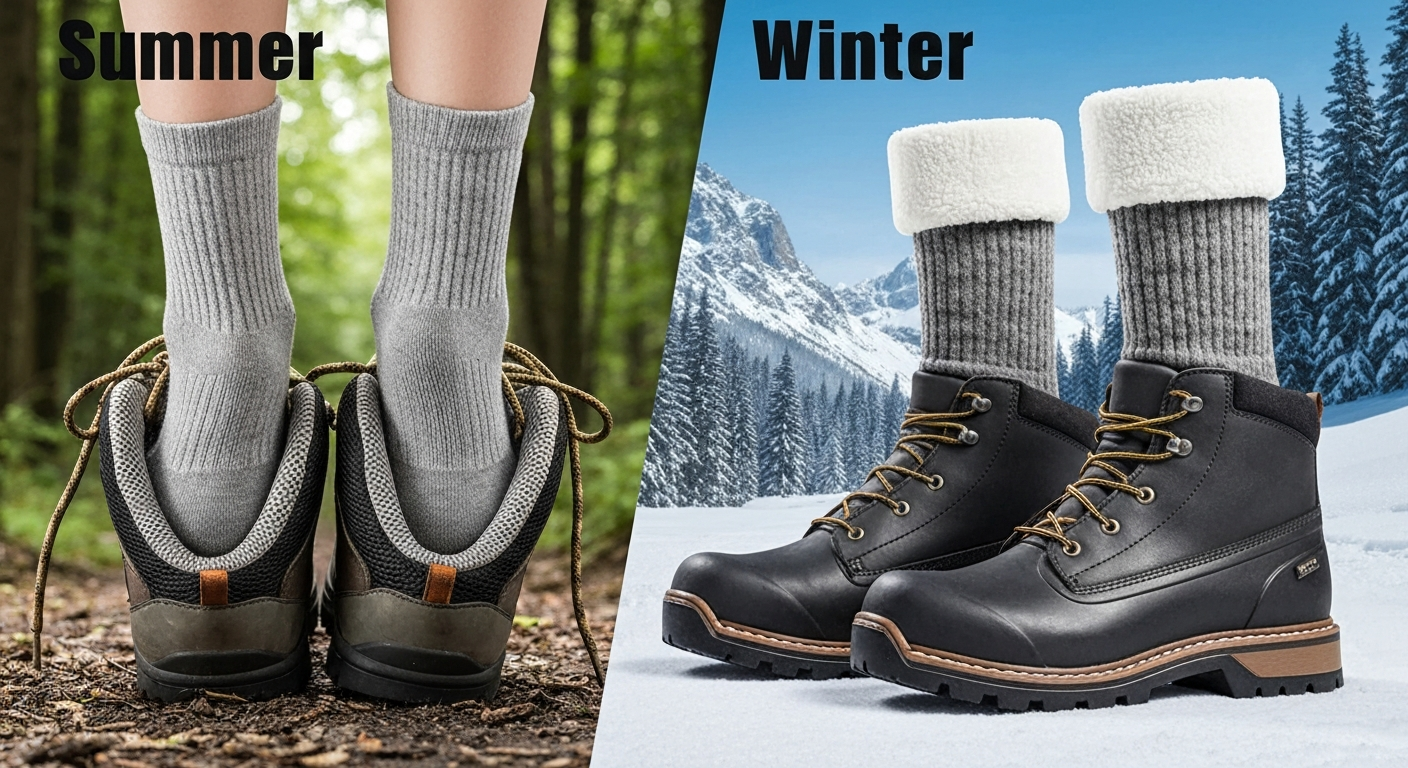
Key Takeaways
- Material is a primary factor in work sock performance – merino wool and bamboo generally outperform cotton in key areas on a jobsite.
- The wrong sock thickness in a steel-toe boot can make feet colder, not warmer, by cutting off circulation.
- Cotton holds moisture instead of moving it – making it a liability in both summer heat and winter cold.
- Bamboo and merino blends are the most versatile choices across seasons, handling sweat, odor, and temperature regulation without switching materials entirely.
- Choosing the right work sock goes beyond warmth level – construction, height, and reinforcement zones all determine how long a sock actually lasts on the job.
Most tradespeople put serious thought into their boots. The sock that lives inside them? Not so much. That’s usually where the shift starts to fall apart – blisters by mid-morning, cold feet after lunch, or a heel blowout that turns a long day into a miserable one. This guide breaks down what to look for, season by season, so foot comfort stops being an afterthought.
The Wrong Sock Can Ruin a Full Shift
Eight hours on a frozen slab or a sun-baked rooftop punishes bad gear fast. Socks sit at the intersection of boot fit, moisture control, and thermal regulation – and when one of those fails, everything else follows. A sock that soaks through by 9 a.m. in summer becomes a blister factory. A sock that loses insulation the moment sweat hits it in winter turns into a cold hazard by noon.
The right sock is a safety consideration, not just a comfort upgrade. On a winter jobsite, wet feet lose heat significantly faster than dry feet – and trench foot, a non-freezing cold injury, can develop in temperatures as high as 60°F if moisture goes unmanaged. That’s a real risk, not a preference.
Why Material Is the Foundation of Sock Performance
Other factors – cushion level, height, reinforcement – are secondary to what the sock is actually made from. The material determines how the sock handles sweat, whether it holds warmth when damp, and how long it survives jobsite friction before falling apart.
Merino Wool: The All-Season Workhorse
Merino wool is the most versatile sock material available for outdoor work. It wicks moisture efficiently, resists odor naturally, and retains roughly 80% of its insulating value even when damp. That last point is what separates it from every other option in cold weather. Soft enough for extended wear without the itch of traditional wool, it holds up through ten-hour shifts without complaint. In summer, its breathability keeps feet from overheating, making it a genuine all-season material rather than a seasonal one.
Cotton: Why It Has No Place on a Jobsite
Cotton absorbs moisture and holds it. In summer, damp cotton against skin all day creates friction and blisters. In winter, a wet cotton sock loses nearly all of its insulation, turning a seemingly comfortable sock into a cold hazard within hours. Many workers default to cotton out of habit – it’s cheap and widely available – but the performance gap becomes obvious fast under real working conditions.
Synthetics and Blends: When Durability Wins
Pure merino wool is excellent, but it benefits from reinforcement. A merino/nylon/spandex blend offers natural warmth from the wool, added durability from the nylon, and enough stretch to hold position all day without bunching or cutting off circulation. Pure synthetic options – polyester, acrylic – wick moisture adequately and tend to outlast wool on the durability front, though they don’t regulate temperature as effectively. For most tradespeople, a quality blend hits the best balance between performance and longevity.
Winter Socks: Warmth Without Wet Feet
Insulation That Still Wicks Sweat
The trap most workers fall into during winter is chasing warmth without accounting for sweat. Even in freezing conditions, physical work generates significant body heat – and a sock that can’t move that moisture away will become cold and clammy within hours. High wool content is key: wool insulates even when damp, which no synthetic can fully replicate. For extreme cold, a thin merino or polypropylene liner sock worn under a heavier cushion outer sock adds a wicking layer without sacrificing too much boot volume. The liner moves sweat away; the outer sock handles the insulation.
Cold Stress, Boots, and What the Regulations Actually Say
OSHA’s cold stress guidelines recommend an inner clothing layer of wool, silk, or synthetic material such as polypropylene to keep moisture away from the body in cold environments – and that principle applies directly to socks. Workers exposed to temperatures at or below 40°F should be monitored for early warning signs of hypothermia, and keeping extremities dry and insulated is a frontline defense. That starts at the gear level, before anything else.
Summer Socks: Cool, Dry, and Blister-Free
Bamboo and Merino for Hot-Weather Work
Two materials consistently outperform the rest in summer conditions: bamboo and merino wool. Bamboo fabric evaporates moisture efficiently thanks to natural air pockets within its fiber structure – it insulates and breathes at the same time, making it especially effective for workers who sweat heavily. Bamboo is also naturally antimicrobial, which helps keep odor manageable across long shifts, though regular washing remains important for optimal freshness. Merino wool behaves similarly, wicking sweat before it can pool and regulating foot temperature as conditions change throughout the day. Mason Workwear’s bamboo work sock collection is built around exactly these hot-weather performance needs, offering a practical starting point for workers looking to address summer foot comfort without guesswork.
Lightweight Features Worth Prioritizing
In summer, thickness works against you. A lighter-weight sock allows more airflow and reduces heat buildup inside the boot. Seamless toe construction eliminates the friction point that causes blisters during long, active shifts. Mesh ventilation panels – found along the instep on quality work socks – boost airflow without sacrificing structure. These aren’t luxury features; they’re the difference between a sock that works and one that just sits there.
Socks Built for Steel-Toe Boots
Match Sock Thickness to Boot Fit, Not the Other Way Around
Steel-toe and composite-toe boots compress the toe box by design. A thick sock stuffed into a tight boot doesn’t add warmth – it restricts blood flow, and cold blood doesn’t circulate. The result is colder toes, not warmer ones. The correct approach is to size boots with the intended sock already on, or to choose a medium-cushion sock if the boot fit is already snug. This is a common and costly mistake that’s easy to avoid.
Targeted Cushioning Over the Toe Box
General terry-loop cushioning throughout the entire sock creates excess bulk that works against steel-toe wearers. What actually helps is targeted cushioning – padding concentrated at the heel and ball of the foot, where impact is highest, rather than layered uniformly across the toe cap area where space is most limited. Socks engineered specifically for steel-toe boots place extra cushioning around the heel and toe to work within the constraints of the boot rather than against them.
Features That Separate Work Socks from the Rest
Cushioning, Height, and Reinforcement
Beyond material, three construction details determine whether a sock actually holds up on a jobsite:
- Cushion level: Medium to heavy cushion for concrete, frozen ground, or high-impact work. Light cushion only when boot fit demands it.
- Height: Over-the-calf is the standard for tall work boots. It stays up without bunching, protects the shin from boot shaft abrasion, and prevents cold air from sneaking in at the top.
- Reinforcement zones: Heel and toe reinforcement is where every work sock eventually fails first. A sock without it is a short-term sock, regardless of material quality.
Cheap Socks Cost More in the Long Run
A bulk pack of discount cotton socks runs around $8 for three pairs. Under jobsite conditions – steel-toe friction, daily washing, moisture exposure – the heel blows out in weeks. Once the moisture barrier fails, the sock is done. Quality merino or bamboo work socks cost more upfront but last multiple seasons with proper care. The math works out in favor of the better sock before the first winter is over.
Beyond the numbers, cold and blistered feet slow workers down. Discomfort is a distraction, and on a jobsite, distraction has real consequences. Many experienced tradespeople report switching to quality wool socks after one bad season and never going back – the performance difference is too obvious to ignore.
Invest Once, Work Comfortably All Year
Building a functional sock rotation doesn’t require overthinking. Three to five pairs, rotated regularly and washed with care, covers most workers through both seasons. Match the sock to the season, confirm fit inside the boot before committing to a full set, and prioritize merino or bamboo over cotton every time. The investment pays back in foot health, fewer lost shifts to discomfort, and socks that actually survive the work they’re put through.
For workers ready to build out a better rotation, Mason Workwear carries workwear built for the demands of trades and outdoor work – from bamboo work socks to the gear that surrounds them.
Mason Workwear
support@masonclothing.com
+1 (760) 286-4266
5830 E 2nd St Casper WY 82609
United States
Wyoming (WY)
82609
United States


